
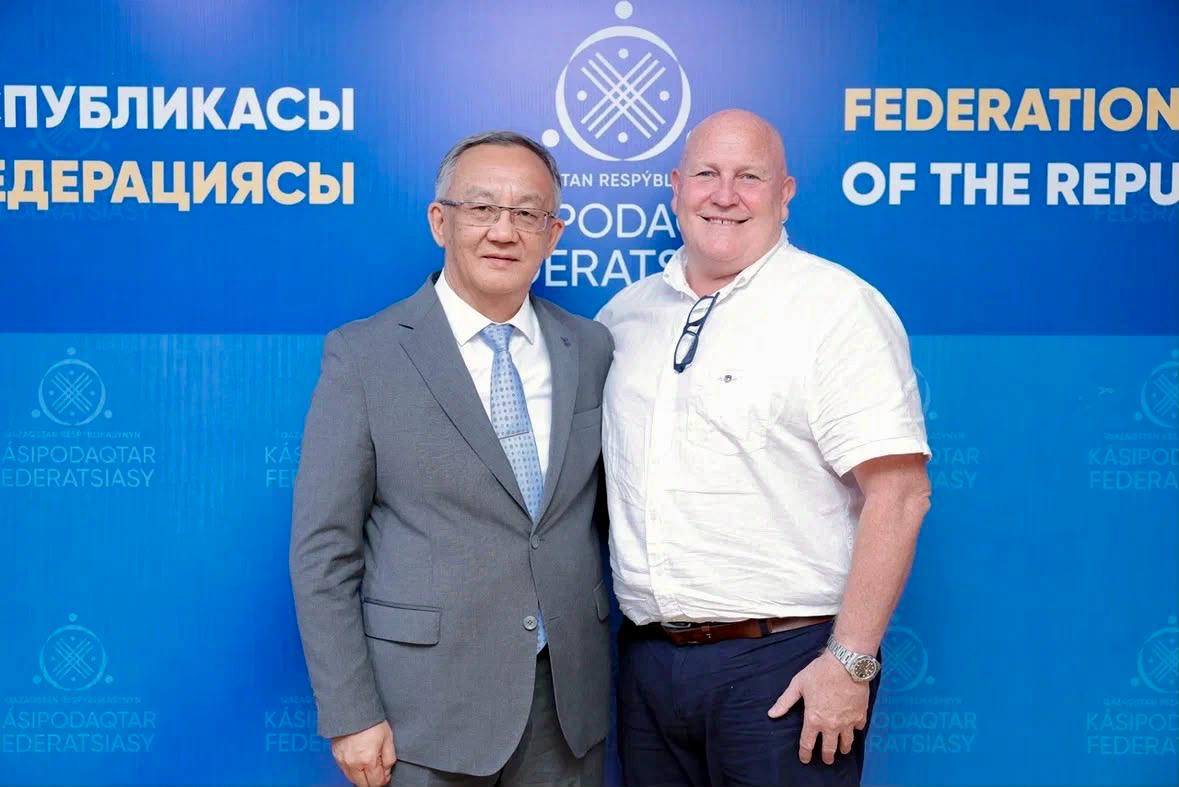
On Wednesday, 12 August, Satybaldy Dauletalin, Chairman of the Federation of Trade Unions of the Republic of Kazakhstan, met with Stephen Cotton, General Secretary of the International Transport Workers’ Federation (ITF), at the FTURK headquarters.
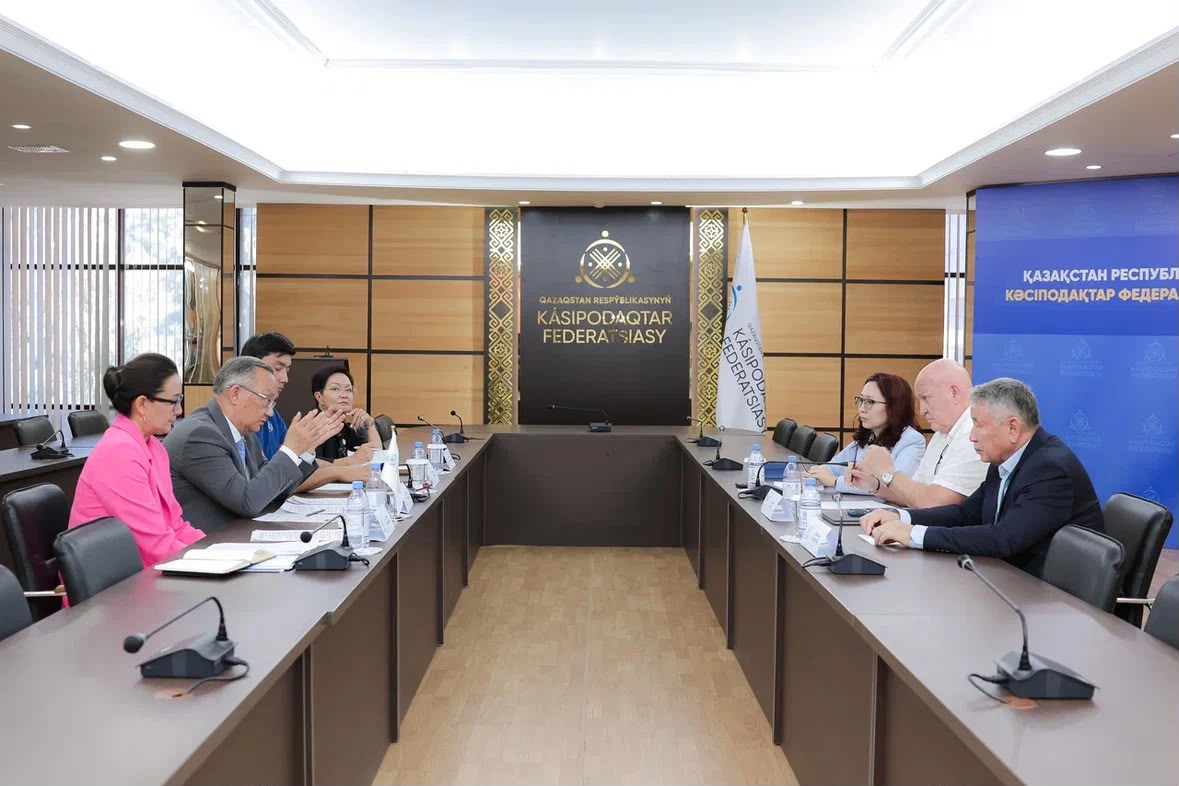
The International Transport Workers’ Federation is a global trade union federation bringing together 760 trade unions representing 16.6 million workers in 150 countries. The organization was founded in 1896 and is headquartered in London, United Kingdom. ITF includes trade unions representing transport workers, including those in rail, aviation, maritime, ports, road and urban transport, fisheries and tourism. The Federation represents workers’ interests at the international level, promotes trade union solidarity, protects labour rights, improves safety and advances decent working conditions in the transport sector.
During the meeting, the parties discussed the protection of transport workers’ labour rights, safety and decent wages, the development of the Trans-Caspian International Transport Route, digitalization of the sector and the impact of artificial intelligence on the world of work.
The visit of the leader of the international trade union organization took place during the strategic meeting of the leaders of Central Asian transport trade unions, held on 11–12 August in Astana.
Welcoming Stephen Cotton, Chairman of the Federation of Trade Unions of the Republic of Kazakhstan emphasized the importance of his visit for developing international relations of the Kazakh trade union movement.
.jpeg)
As Satybaldy Dauletalin noted, the Federation of Trade Unions is the largest public organization in Kazakhstan, bringing together around 2 million trade union members, 24 sectoral trade unions, 20 territorial associations and around 17,000 primary trade union organizations.
Addressing the issue of transport trade unions, the Chairman of the FTURK emphasized the historical connection between the sector and the formation of the trade union movement in Kazakhstan.
“All the key areas of the Federation of Trade Unions’ activities are inherent to the global trade union movement. Last year, we held our Congress and adopted the Strategy of Activities for 2025–2030, and we are now consistently developing our international activities. We actively cooperate with the International Labour Organization, the International Trade Union Confederation and, of course, global trade unions. I believe that today’s meeting will also contribute to the development of our cooperation with the International Transport Workers’ Federation. Last year, for the first time in Kazakhstan’s history, we held a Summer School for European trade unions, which was attended by more than 50 national trade union centres from European and Asian countries,” Satybaldy Dauletalin emphasized.
Speaking about the Trans-Caspian International Transport Route, Satybaldy Dauletalin stressed that the development of transport infrastructure cannot be viewed solely through the lens of investment, cargo flows and economic indicators.
“We clearly understand that behind infrastructure, investments and cargo flows are thousands of workers who ensure the sustainability of the entire system. Our fundamental position is clear. A transport corridor should not only be fast; it must also be fair and safe for all workers. It is from this perspective that the Federation views the development of international transport links — as a process that must be accompanied by respect for labour rights and the creation of safe working conditions,” the Chairman of the FTURK noted.
Satybaldy Dauletalin also told Stephen Cotton about the current nationwide trade union campaign “Strong Trade Union – A Strong Voice for the Working Person.”
“Here, we pay particular attention to primary trade union organizations. As part of this campaign, we provide legal assistance, hold occupational safety days, train trade union organizations and develop digital services. We believe that this approach is very important, including for the transport sector,” said the Chairman of the Federation of Trade Unions of the Republic of Kazakhstan.
Regarding the specifics of the sector, Satybaldy Dauletalin noted that transport workers are located in different regions, while modern supply chains increasingly extend beyond a single country.
“The labour chain is becoming increasingly cross-border. The most important priorities for us are occupational safety and decent wages,” emphasized the Kazakh trade union leader.
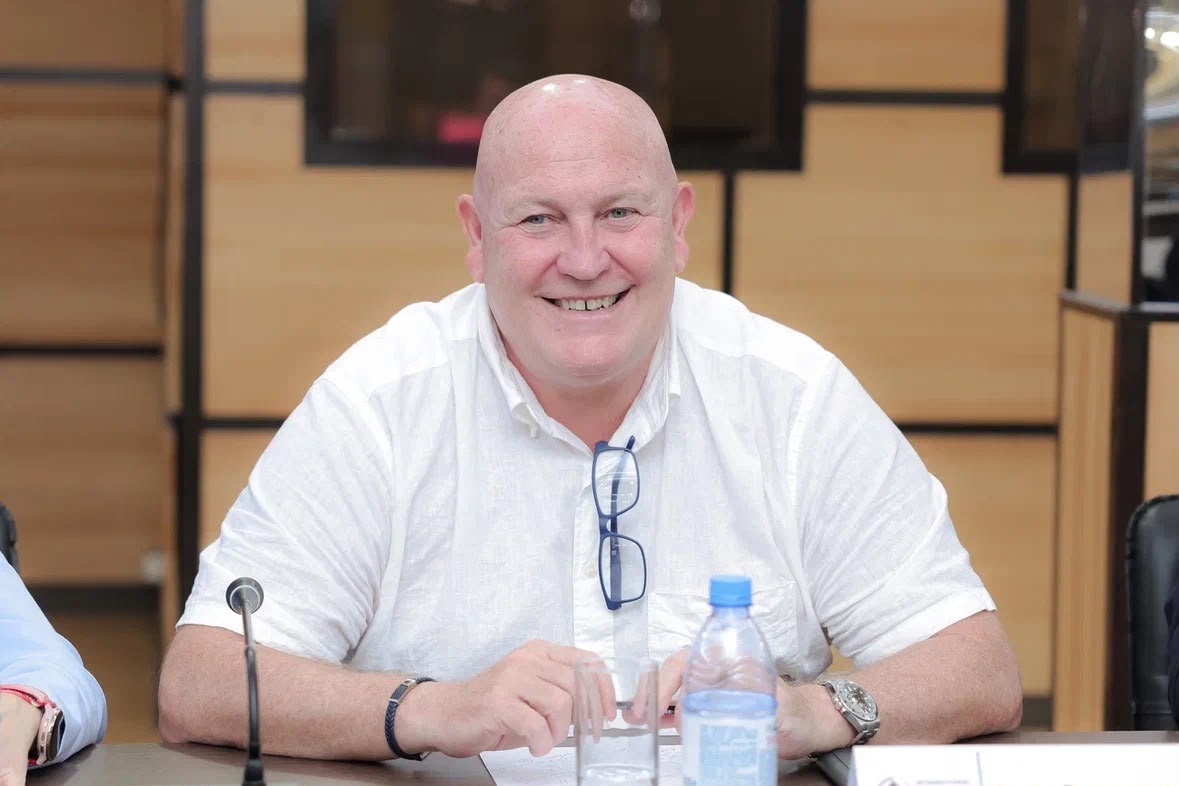
Continuing the discussion, the Chairman of the FTURK addressed issues related to wages. He recalled Kazakhstan’s ratification of ILO Convention No. 131 concerning Minimum Wage Fixing.
“Last year, Kazakhstan ratified ILO Convention No. 131. For us, this was a very important result of the consistent work of the Federation of Trade Union Organizations. Our task is to ensure its practical implementation and improve mechanisms for determining and indexing wages. Over the past five years, the minimum wage in Kazakhstan has doubled. At the same time, trade unions continue working to further improve the wage system and bring it into line with international standards. We are actively working with our social partners in this area,” the Chairman of the FTURK noted.
Another topic of the meeting was the new Constitution of Kazakhstan. Satybaldy Dauletalin spoke about the Federation’s work in the constitutional reform process and emphasized the importance of enshrining the right to work.
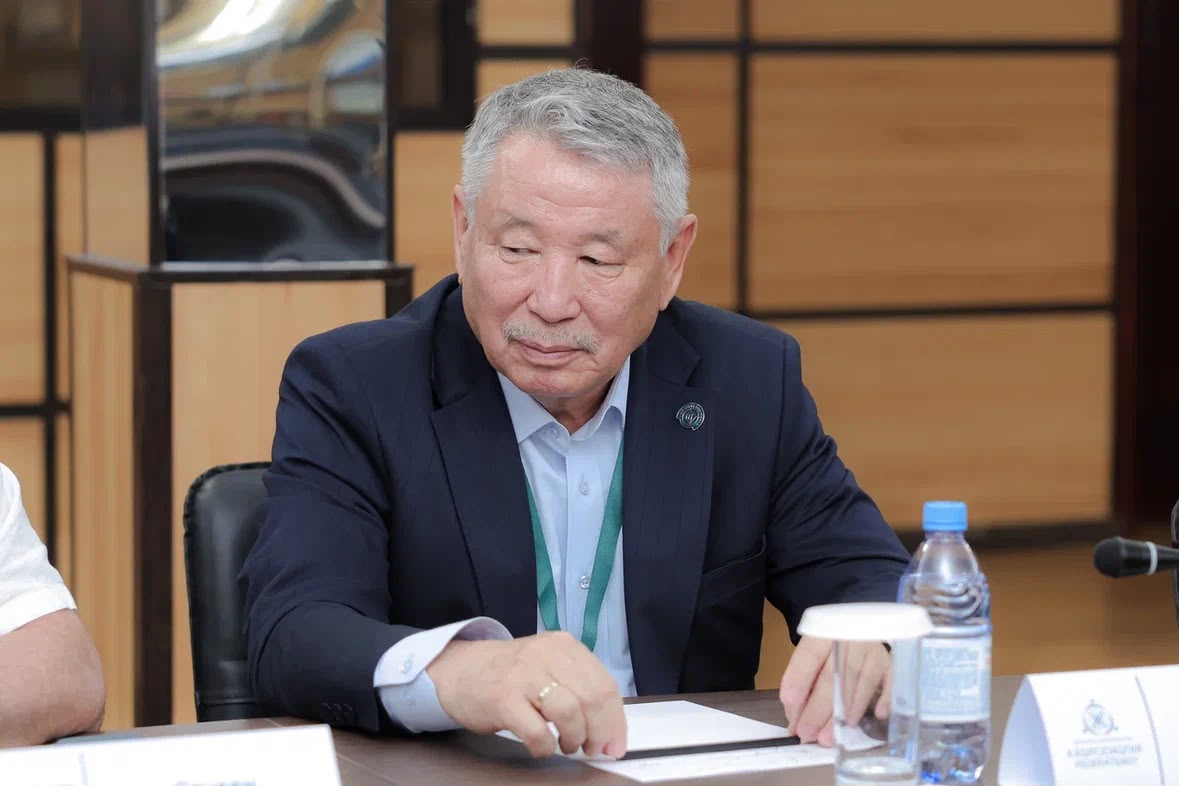
“An important event that took place in Kazakhstan was the adoption of the new Constitution. We managed to enshrine the right to work. Our task is to ensure that this provision has real substance in our daily lives. The enshrinement of labour guarantees in the Basic Law must be followed by effective mechanisms for protecting workers and by the day-to-day activities of trade unions,” emphasized the Chairman of the Federation of Trade Unions of the Republic of Kazakhstan.
Satybaldy Dauletalin also addressed technological changes and the future of work. The Chairman of the Federation of Trade Unions emphasized that the digitalization of transport is already becoming a factor that directly affects occupations, work organization and qualification requirements.
“Technological progress must not come at the expense of people or through violations of labour rights. Trade unions must actively participate in the digital transformation of various sectors of our country. Trade unions must play an active role in this process. We have developed and recently adopted, at the General Council, a Standard for the Protection of Workers’ Rights in the Use of Artificial Intelligence. We have also adopted recommendations on these standards in order to incorporate them into general, regional and collective agreements,” Satybaldy Dauletalin said.
In turn, ITF General Secretary Stephen Cotton expressed the International Transport Workers’ Federation’s interest in developing cooperation with Kazakhstan and the trade unions of Central Asia, including promoting the FTURK Standard on international sectoral platforms.
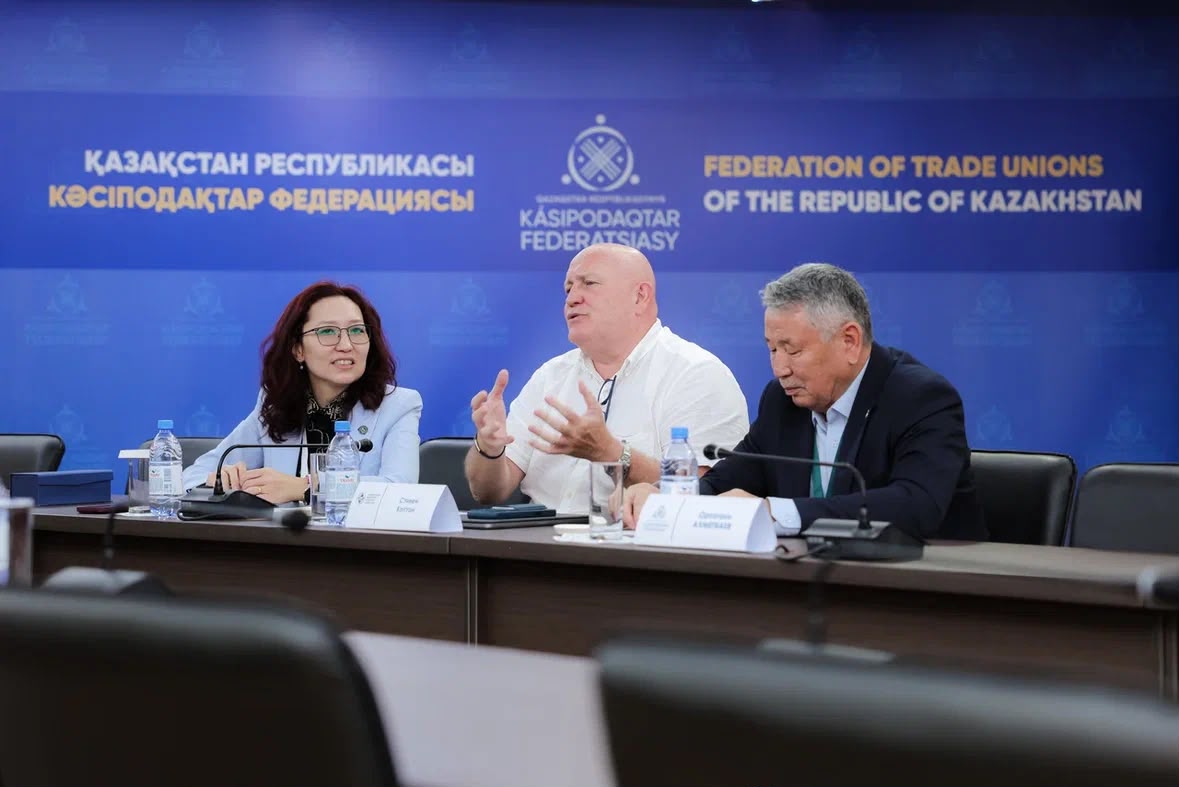
“Our strategy is to support companies that understand the importance of respecting workers’ rights, have effective collective agreements and respect the instruments and standards of the International Labour Organization. We are ready to present the experience of the Federation of Trade Unions of Kazakhstan in protecting workers’ rights in the use of artificial intelligence at an upcoming event in Sri Lanka,” the ITF General Secretary emphasized.
Stephen Cotton separately addressed the prospects for subregional cooperation among Central Asian trade unions. He noted Kazakhstan’s important role in developing trade union cooperation in the region and proposed discussing further areas of joint work.
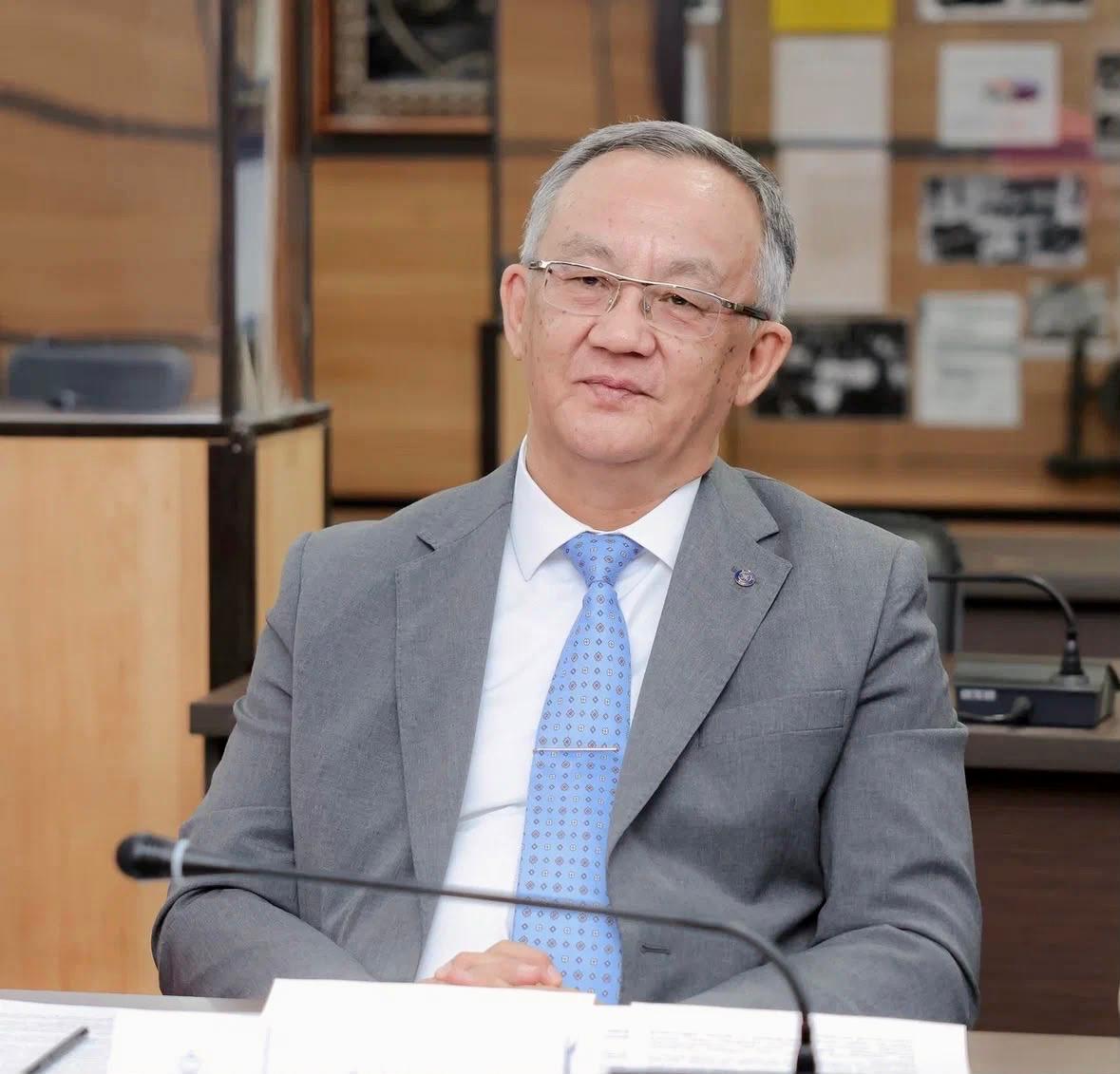
“Today, we are ready to lay the foundation for closer subregional cooperation. Kazakhstan is very important to us, as it has authority within the international trade union movement. We see great opportunities in this. In addition, Orazgali Akhmetbayev, Chairman of the sectoral trade union ‘Kazprofzhel’, is a member of the ITF Executive Board. The development of the Trans-Caspian International Transport Corridor is of great importance to the region. If we can be useful in protecting labour rights, engaging with companies or developing labour relations, the ITF is open to joint work,” Stephen Cotton noted.
During the meeting, Satybaldy Dauletalin supported the initiative to develop cooperation not only between the FTURK and ITF, but also among transport trade unions throughout the region.
“We have united Central Asia and established the Confederation of Trade Unions of Central Asian Countries. I am ready to provide personal assistance in developing sectoral cooperation. Negotiations with trade union leaders can provide an additional opportunity to advance this initiative,” said the Chairman of the FTURK.
.jpeg)
At the conclusion of the meeting, the parties agreed to expand cooperation in developing trade union ties in Central Asia, strengthening contacts with transport trade unions in the region and developing joint approaches to protecting the labour rights of workers in the sector.
FTURK Trade Union Communications Centre